

CONDITIONS · PHYSICAL
Poor Posture
Most people already know their posture isn't ideal. What fewer understand is that posture isn't simply a habit the body has fallen into, it's a reflection of how the nervous system has organised the body around its accumulated history of load, injury, and stress.
Posture isn't laziness, it's adaptation
The spine doesn't simply slump because we don't try hard enough. It adapts, constantly and intelligently, to the demands placed on it. Years of desk work shift the head forward and round the upper back. Old injuries that weren't fully resolved leave protective patterns in the muscles and fascia. Chronic stress keeps the shoulders elevated and the breath shallow. The body organises itself around all of this, and over time that organisation becomes structural.
This is why telling someone to "sit up straight" doesn't work for long. The nervous system reverts to what it knows because the underlying pattern hasn't changed. Willpower can temporarily override the posture; it can't rewrite the nervous system's map of how the body should be held.
Meaningful postural change requires working with the nervous system itself, helping it develop a new map of where the body is in space, and new strategies for how it organises itself under load.
How we approach this
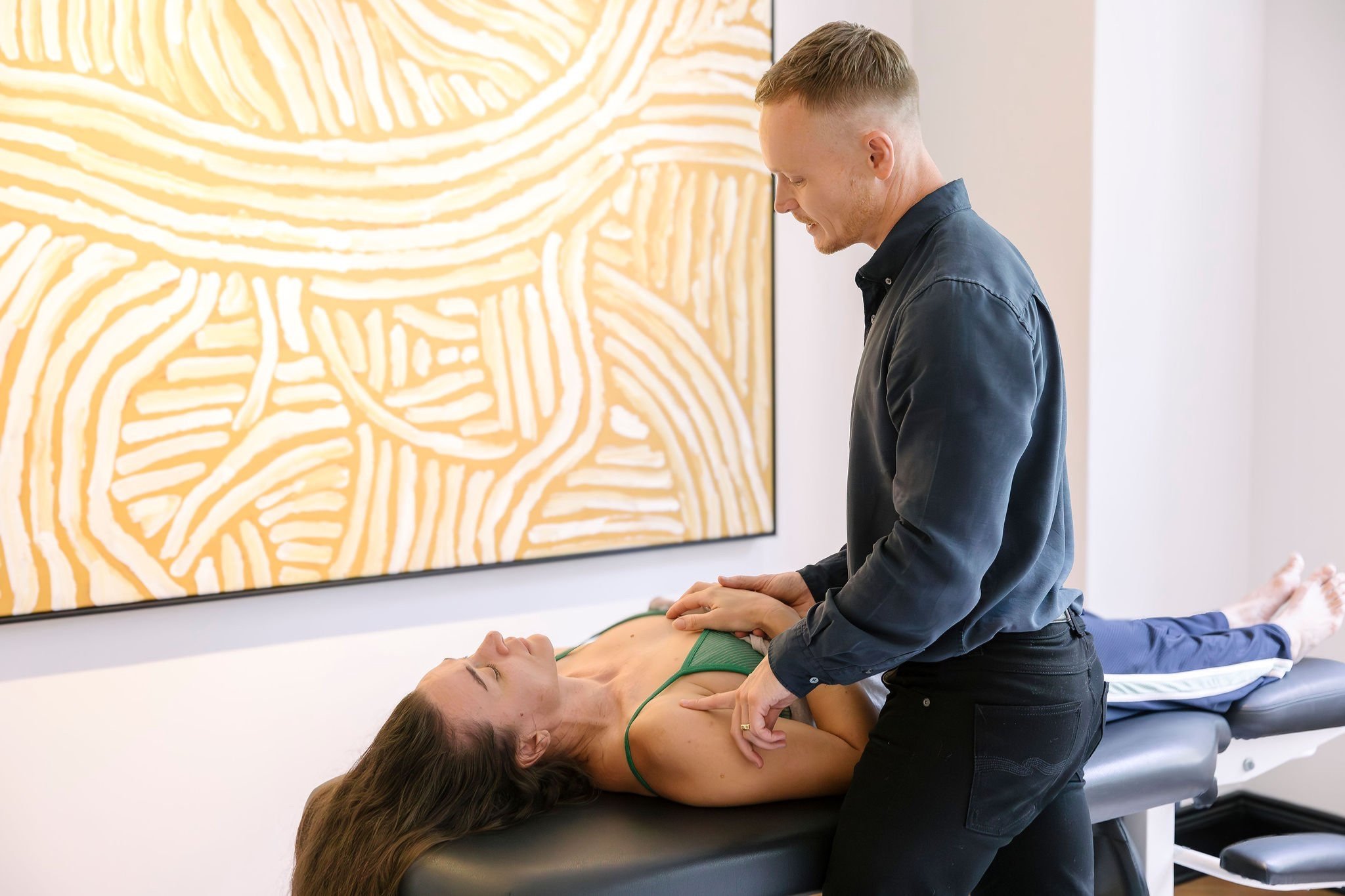
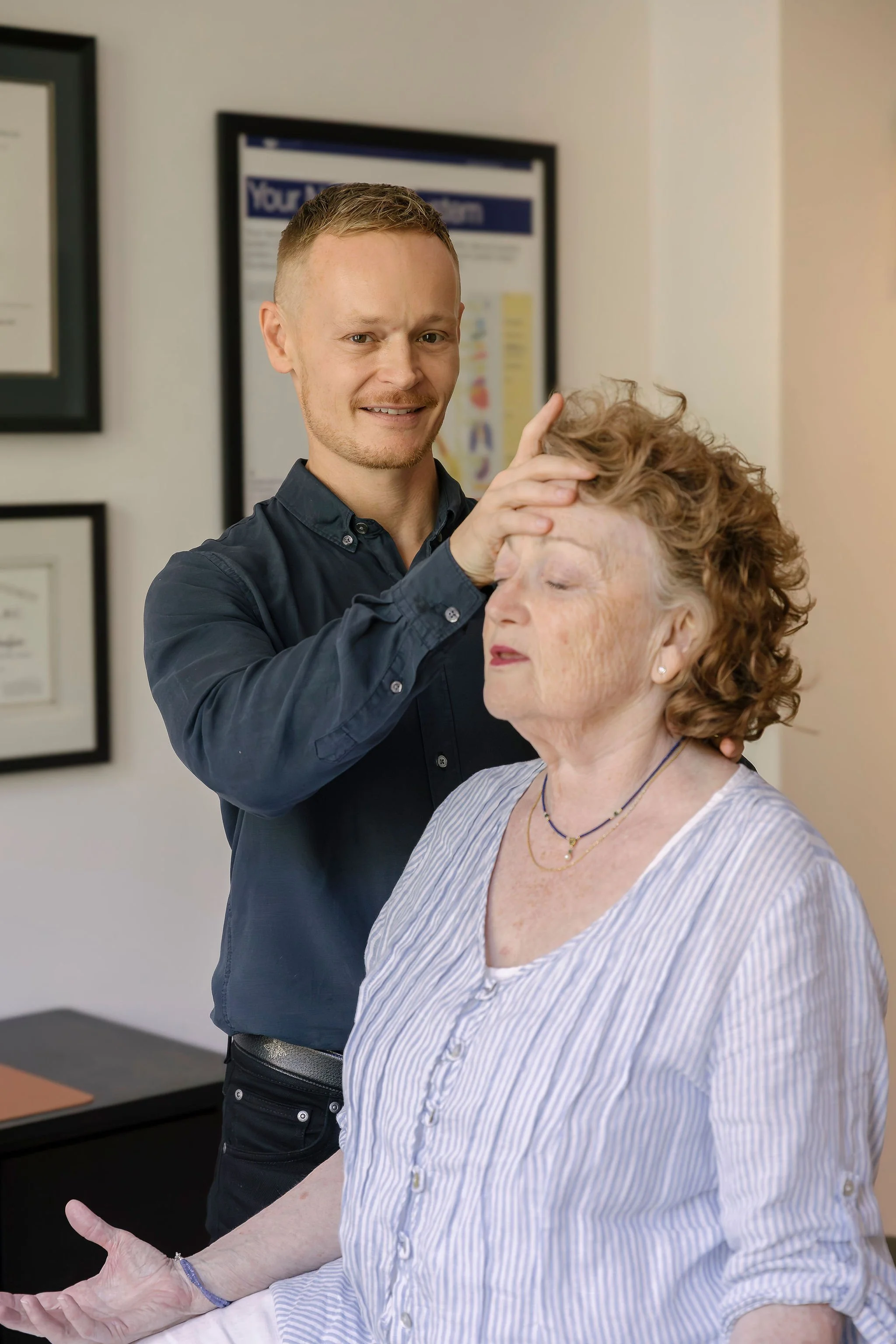
Network Spinal is particularly relevant for postural change because of how it works. The precise contacts along the spine, particularly at the neck and sacrum, help the nervous system develop a more accurate sense of spinal position and begin to organise the body around that new awareness. Over time, patients often find that their posture improves not because they're consciously holding themselves differently, but because the nervous system's default pattern has shifted.
Gentle manual chiropractic adjusting is available alongside this for patients who want or benefit from more direct spinal work. Care is tailored to what your body is showing at each visit.
Neck pain: often driven by forward head posture
For desk workers: the postural demands of a desk career
How stress shapes posture over time
What people notice
Patients often describe postural change as one of the most visible and unexpected outcomes of care, noticed first by other people rather than by themselves. Friends or colleagues comment that they seem to be holding themselves differently. They notice they're no longer reminding themselves to sit up. Their shoulders have relocated from somewhere near their ears to somewhere closer to where they belong. The breath has opened.
Posture follows the nervous system
Come in and find out what's driving yours, and what might shift it. No referral needed. First visits available Wednesday afternoons and Thursday mornings.
Common questions about posture
Can a chiropractor actually fix poor posture? A chiropractor cannot force posture to change through willpower or reminders, and neither can you. What can shift is the underlying pattern. Because posture reflects how the nervous system has organised the body, care here works with that directly, so that an improved posture holds because the default pattern has changed, not because you are consciously holding yourself up.
Why does my posture go back to slumping the moment I stop thinking about it? Because "sit up straight" only overrides the posture for as long as you concentrate. The nervous system reverts to the map it knows. Lasting change comes from helping that map update, which is what gentle, consistent care aims to do, rather than relying on willpower that fades within minutes.
Is the care gentle, or does it involve forceful cracking? The signature approach, Network Spinal, is gentle and low-force, using light, precise contacts along the spine. Gentle manual adjusting is available alongside it for those who want or benefit from more direct work. Everything is tailored to what your body is showing at each visit, and explained before it happens.
My posture is from years at a desk. Can it still change? Yes. Desk-driven posture, the forward head and rounded upper back, is one of the most common presentations seen here. Because it is a learned pattern rather than fixed damage, gentle care that helps the nervous system reorganise can make a real difference over time.
How long before I notice a difference? Postural change tends to build gradually, and it is often noticed first by other people, who comment that you are holding yourself differently, before you notice it yourself. Dr Euan will give you an honest picture of what to expect after your first visit.