

CONDITIONS · STRESS & NERVOUS SYSTEM
Stress & Anxiety
When stress becomes the baseline rather than the exception, the body pays the price. If anxiety feels like a constant undercurrent in your life, your nervous system may be asking for a different kind of support.
Stress and anxiety are not only mental experiences. They are states the whole nervous system moves into, and when they persist they tend to leave their mark in the body. For some people that looks like burnout, the particular flatness that follows running on adrenaline for too long. For others it is a more constant physical tension that sits in the shoulders and jaw. Understanding how stress gets stored in the body is often the piece that makes the rest make sense.
It's not in your head
Anxiety is a whole-body experience. It lives in the chest that tightens before a meeting. The jaw that aches in the morning. The sleep that doesn't quite feel like rest. The sense of being permanently braced for something you can't quite name.
We live in a city that runs fast. The demands on your attention, your time, and your capacity to perform don't switch off at 5pm, and your nervous system knows it. What begins as a reasonable response to pressure can, over time, become the default setting your body is stuck in.
That stuck quality is not a character flaw. It is a physiological pattern, and one that can change.

What it can look like
In the body: persistent tension in the neck, shoulders or jaw. Shallow breathing that you only notice when you finally take a deep one. A racing heart or tightness in the chest that arrives without obvious cause. Headaches that build through the day. Gut discomfort that comes and goes. Fatigue that sleep doesn't seem to fix.
In daily life: difficulty switching off in the evening, sleep that feels light or fragmented, irritability at things that wouldn't normally bother you, a background hum of worry that follows you from one task to the next. A sense that things which used to feel manageable now feel like too much.
Many people have lived with these patterns for so long they've stopped registering them as unusual. They're simply the texture of the day.
Anxiety isn't just a thought pattern. It's stored in the body, in the spine, the muscles, the breath. That's why working with the nervous system directly can reach places that thinking alone cannot.
Why the spine matters here
The spine is the primary channel through which your nervous system communicates with the rest of your body. When stress accumulates — physical, emotional, or both, it tends to settle into patterns of tension held in the spine and surrounding tissues.
Over time these patterns become self-reinforcing. The nervous system learns to brace. Posture adapts around it. Breathing shallows. The body begins operating as though the threat is still present, even when it isn't.
Gentle Chiropractic care works with this directly, not by overriding the body's response, but by creating the conditions for the nervous system to recognise that it is safe to unwind.
How we work with this
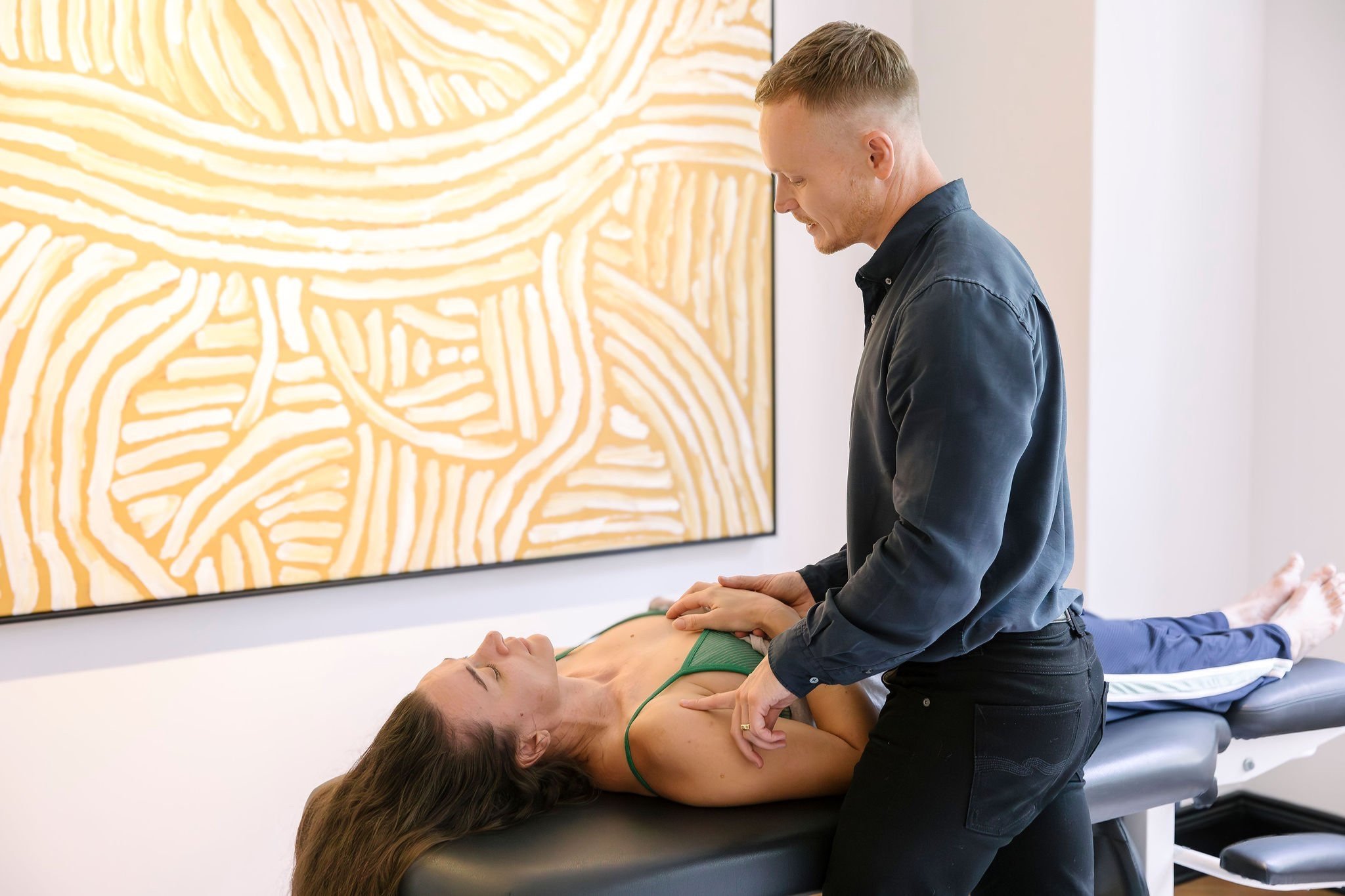
Care at WellWellWell Sydney begins with a conversation. Dr Euan will take the time to understand your history, how stress shows up for you specifically, and what you're hoping for, before any hands-on work begins. Nothing is assumed and nothing is rushed.
Network Spinal is the primary approach, a gentle, precise method that uses light contacts along the spine to invite the nervous system to release stored tension patterns. It requires no manipulation or force, and patients often describe a noticeable shift in how their body feels even in the first few visits.
For patients who prefer or benefit from more direct spinal work, gentle manual Chiropractic adjusting is also available. The two methods complement each other well, and your care will always be tailored to what your body is showing, not a fixed protocol applied to everyone.
It's worth noting that Chiropractic care is not a treatment for anxiety disorders. If you are experiencing significant mental health concerns, Dr Euan will encourage you to work alongside an appropriate mental health professional. Many patients find that both forms of support complement each other well.
What people notice over time
Patients who come to WellWellWell Sydney for stress and anxiety often describe change gradually and then quite clearly: they sleep more deeply, they find themselves less reactive, their shoulders are somewhere closer to their natural position by the end of the day. Situations that previously triggered overwhelm begin to feel more manageable.
These shifts don't happen overnight. But they build, and they tend to last, because they reflect a genuine change in how the nervous system is functioning, not simply a temporary relief from symptoms.
This is a good place to start
Many people who come to WellWellWell Sydney for stress and anxiety have already tried other approaches. You don't need to explain yourself, just arrive.
You might also find these helpful
Understanding your nervous system — how stress gets stored and how change happens
Burnout — when stress has been running for too long
Nervous system regulation — what it means and what it makes possible
Your first visit — what to expect when you come in
Chiropractic care supports nervous system function and general wellbeing. It does not diagnose or treat anxiety disorders or any other medical or psychiatric condition. If you are in crisis or need urgent mental health support, please contact Lifeline on 13 11 14 or Beyond Blue on 1300 22 4636.