

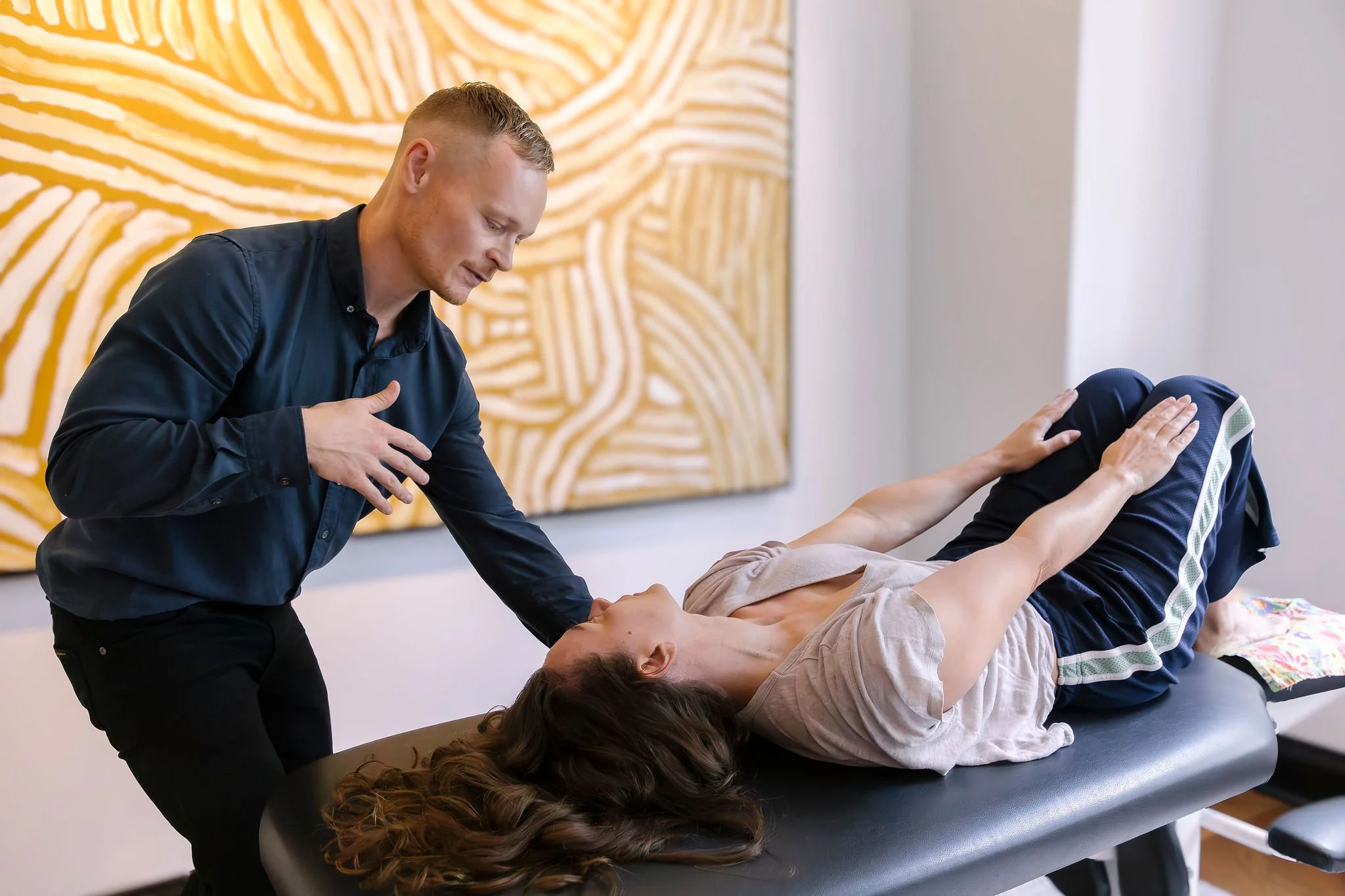
The Complete Guide to Network Spinal Care
By Dr Euan McMillan | WellWellWell Sydney
Network Spinal Care is a gentle, low-force approach to Chiropractic developed by Dr Donald Epstein. It uses specific light contacts along the spine and focuses on the relationship between the spine and the nervous system. Research into Network Spinal includes retrospective patient surveys, physiological measurements and research into the Network Spinal Wave, but the clinical evidence base is still developing and does not establish that Network Spinal treats or cures every condition.
If you've found your way here, you're probably doing what most thoughtful people do before they try something new in healthcare: researching carefully. You want to understand what Network Spinal Care actually is, how it is practised, what the proposed mechanisms are, whether there's evidence behind it, who it may be appropriate for, and what to realistically expect.
This page is written to answer those questions honestly, including the ones that don't have tidy answers.
I've been practising Network Spinal Care for over 20 years. I hold a Master-E certification, which represents an advanced level of training in this method, and I'm part of the Network Spinal teaching team. In that time I've worked with thousands of patients across a wide range of presentations, from acute physical pain to people describing chronic stress, tension, burnout, and a desire to function better and feel more like themselves.
What I've observed in practice has led me to place considerable emphasis on the nervous system and the way people adapt to physical and psychological stress. Network Spinal Care is one approach I use to work with that relationship. The sections below explain what the approach is, what the research has examined, and where the evidence remains uncertain.
1. What Is Network Spinal Care?
Network Spinal Care, sometimes called Network Spinal Analysis or Network Care, is a gentle, low-force approach to Chiropractic that works with the relationship between the spine and the nervous system.
It was developed by American Chiropractor Dr Donald Epstein in the 1980s and has since been practised internationally. The approach uses specific, light contacts at points along the spine rather than relying on the thrust-based spinal manipulation used in some chiropractic techniques.
The central idea within the Network Spinal model is that specific sensory input can be used to help a person become more aware of patterns of tension and movement. The intended focus is not to force a joint into a particular position, but to work with the person's response to the contact and the patterns observed during care.
Two movement phenomena are commonly described within Network Spinal Care:
The Respiratory Wave: a rhythmic, wavelike movement associated with breathing and spinal motion. Within the Network Spinal framework, this is described as an emergent response rather than a movement produced by the practitioner.
The Somatopsychic or Network Wave: a larger and more dynamic movement pattern that has been investigated using surface electromyography and mathematical analysis. Research has examined the characteristics and repeatability of this phenomenon, although research into the wave itself should not be confused with clinical evidence that Network Spinal produces particular health outcomes. See the research section below.
For a deeper introduction to the broader philosophy and evolution of the method, see our page on Network Spinal and EpiEnergetics.
2. How It Differs from Conventional Chiropractic
Chiropractic includes a range of techniques and clinical approaches. Some use spinal manipulation or mobilisation, while others use lower-force contacts. Network Spinal Care sits at the gentler end of that spectrum.
The differences are worth understanding because they influence what a session feels like and what the practitioner is trying to assess.
Force: Network Spinal uses light, specific contacts rather than relying on high-velocity thrusting or the audible cavitation associated with some forms of spinal manipulation.
Target: Network Spinal places particular emphasis on the nervous system and the person's response to specific spinal contacts. Traditional chiropractic techniques may place greater emphasis on joint movement, mobility and musculoskeletal function.
Mechanism: Within the Network Spinal model, the contacts are intended to provide specific sensory input and encourage changes in movement, awareness and regulation. The precise biological mechanisms underlying the reported effects remain an area of research.
Goal: The emphasis in Network Spinal is broader than changing the movement of an individual joint. The approach aims to work with patterns of tension, movement and nervous-system response as a whole.
Clinical approach: The appropriate chiropractic approach depends on the individual presentation. At WellWellWell Sydney, gentle Chiropractic manual adjusting may also be used when clinically appropriate, alongside or instead of Network Spinal Care.
This doesn't mean one chiropractic approach is right for everyone. The purpose of understanding the differences is to help you decide what style of care best fits your needs and preferences. Our Network Spinal versus traditional Chiropractic comparison goes into this in more detail.
3. Stress, the Nervous System and the Spine
There is a well-established physiological relationship between stress, the nervous system, muscle activity, breathing, sleep and pain. When the body experiences stress, the autonomic nervous system and other regulatory systems respond, helping the person adapt to the demands they are facing.
The Stress Response and the Body
During acute stress, sympathetic activation can increase alertness, alter breathing and heart rate, increase muscle readiness and temporarily shift resources towards immediate demands. Once the demand has passed, the body can begin returning towards baseline.
When stress is prolonged or repeatedly activated, the cumulative physiological cost of adaptation is often described as allostatic load. People may experience persistent muscle tension, changes in sleep, difficulty unwinding, altered breathing patterns, fatigue or increased sensitivity to discomfort.
Why the Spine Matters in This Discussion
The spine is closely connected with the nervous system anatomically. The spinal cord runs within the spinal canal, while the surrounding muscles and connective tissues contribute to posture, movement and sensory input.
That does not mean that stress is literally stored in the spine as a substance or that every persistent symptom is caused by spinal tension. Those are stronger claims than current evidence allows.
Within the Network Spinal model, specific spinal contacts are used as a way of providing sensory input and observing the body's response. The approach proposes that working with these responses may influence patterns of movement, breathing, awareness and regulation.
Research into the Network Spinal Wave has investigated observable movement and electromyographic characteristics associated with the approach. A 2016 peer-reviewed paper reviewed this research and discussed a possible central pattern generator interpretation of the wave. This is research into a specific physiological phenomenon, not proof that Network Spinal causes broad improvements in health. See the evidence summary.
For a broader discussion of stress physiology, see how stress affects the body and understanding your nervous system.
4. What Happens During a Session
Understanding what actually happens in a session can make the experience much less mysterious. Network Spinal Care is generally practised using light contacts, with the person remaining fully clothed.
Your First Visit
Your first appointment runs for approximately one hour. It includes:
A detailed intake conversation: We discuss your health history, the concerns that brought you in, previous care and what you would like to understand or work on.
A spinal and nervous system assessment: I assess how your spine moves, where tension is present, how you respond to light contact and how your body is organising movement and posture. The assessment is explained as we go.
An explanation of the findings: Before beginning care, I'll explain what I've observed and the approach I would recommend based on your individual presentation.
Your first session: If appropriate, your initial care is introduced during the same appointment and is generally brief. The first visit is also an opportunity to decide whether the approach feels appropriate for you.
Ongoing Sessions
Ongoing sessions generally run for approximately 15 minutes after the first visit. You remain fully clothed and lie face-down on an adjusting table.
During the session, I make specific, light contacts along the spine, including areas around the base of the skull and sacrum. Other contact points may be used depending on the assessment. I observe how your body responds between contacts and adjust the session accordingly.
Some people notice changes in breathing, movement, body awareness or relaxation during or after a session. Others notice very little during the appointment and more awareness afterwards. Individual responses vary.
→ What happens in a Network Spinal session?Session Frequency
Some people begin with more frequent visits, while others require a different schedule. Frequency should be individualised according to the person's presentation, response to care, goals and clinical circumstances.
There is no single schedule that is appropriate for everyone, and the care plan can be adjusted as circumstances change.
5. The Three Levels of Care
Within the Network Spinal framework, care is commonly described in three progressive levels. These are part of the language and model of Network Spinal and are intended to describe different phases of the work.
Level 1: Discover Care
Discover Care is described as the foundational level. The focus is on awareness, movement, breathing and the development of new strategies for responding to tension and stress.
The respiratory wave is commonly associated with this stage, although individual experiences vary and not everyone will experience the same movement phenomenon.
Level 2: Transform Care
Transform Care is described as a deeper exploration of established patterns of tension, movement and response. The more dynamic Network Wave is commonly associated with this level in the Network Spinal literature.
People can have a wide range of experiences during care. Some report increased body awareness or changes in long-standing patterns, while others experience the sessions more subtly.
Level 3: Awaken Care and Beyond
Awaken Care is described within the Network Spinal model as a phase focused on integration, adaptability, awareness and applying the capacities developed through earlier stages of care.
The emphasis is less on a specific symptom and more on how the individual relates to movement, stress, recovery and daily life.
6. Why People Seek Network Spinal Care
People come to WellWellWell Sydney with a wide range of concerns. Network Spinal Care is not presented as a treatment for every named condition, and the appropriate role of Chiropractic depends on the individual presentation.
Some people seek care for musculoskeletal concerns such as:
Others describe concerns more closely related to stress, tension, sleep, overwhelm or their ability to regulate after periods of prolonged demand. Relevant areas of this site include:
- Nervous system regulation
- Burnout and chronic stress
- Chronic fatigue
- Stress and anxiety
- Fibromyalgia
- Tension and stress
- Trauma-related body awareness and tension
When a person has a diagnosed medical condition, Network Spinal Care should not be considered a substitute for appropriate medical assessment or management. Where Chiropractic may have a role, it should be clear which aspects of the presentation are being addressed and what other care may also be appropriate.
7. Who Network Spinal Care May Be Appropriate For
Network Spinal Care is a low-force approach, which is one reason some people seek it out, particularly if they do not want a more forceful style of manual care.
Busy professionals and people living with sustained stress are a significant part of this practice. They may describe difficulty switching off, persistent tension, disrupted sleep, recurring musculoskeletal symptoms or simply feeling that their usual strategies are no longer enough.
People new to Chiropractic or people who prefer a gentler approach may appreciate that Network Spinal uses light contacts rather than relying on conventional high-velocity manipulation.
Pregnant women may seek low-force Chiropractic care for musculoskeletal comfort and support during pregnancy. Suitability should always be assessed individually, taking pregnancy stage, health history and any relevant medical factors into account.
Children and families may also be seen at the practice. Paediatric care requires age-appropriate assessment and technique, and the suitability of care should be determined individually.
Older adults may prefer low-force approaches where a gentler style of care is more comfortable or better suited to their circumstances.
More broadly, Network Spinal may appeal to people who are curious about the relationship between the spine, movement, stress and nervous-system regulation and who want to understand whether this particular approach is appropriate for them.
People who have experienced other somatic approaches may also find our article on Network Spinal and Spinal Energetics useful.
8. The Research Evidence
Network Spinal Care has been the subject of formal research, but it is important to distinguish between research describing the approach or an observed physiological phenomenon and research demonstrating that the treatment causes a particular clinical outcome.
The published literature includes retrospective patient surveys, research into the Network Spinal Wave and retrospective analysis of physiological measures such as heart rate variability. Much of this literature is observational rather than randomised controlled research.
| Study | What was examined | What was reported | Important limitation |
|---|---|---|---|
|
Blanks, Schuster & Dobson, 1997 View study |
A retrospective survey involving 2,818 respondents from 156 Network offices in the United States, Canada, Australia and Puerto Rico. | Participants reported positive perceived changes across physical, mental/emotional, stress-related and life-enjoyment domains, as well as overall quality of life. | Retrospective and self-rated data, including recall of health before care. The study did not use a randomised control group, so it cannot establish that Network Care caused the reported changes. |
|
Senzon, Epstein & Lemberger, 2016 View study |
Research into the Network Spinal Wave, including surface electromyography and mathematical characterisation of the movement phenomenon. | The paper reviewed research describing the wave as a repeatable phenomenon and discussed a possible central pattern generator interpretation. | This was a narrative review of a physiological phenomenon, not a randomised clinical trial demonstrating treatment effectiveness or disease treatment. |
|
Knowles, Knowles & Kotur, 2017 View study |
A retrospective analysis of 46 patients receiving Network Spinal Analysis care, comparing heart rate variability measurements at the beginning and after 90 days. | Changes in HRV were reported, with two subgroup analyses reaching statistical significance. | Small retrospective study without a randomised control group. The findings therefore do not establish that Network Spinal caused the observed changes. |
Our research page goes into much greater depth, including the strengths and limitations of the available literature and links to the underlying publications.
→ Read the full research and evidence review9. About Dr Euan McMillan
I graduated from the New Zealand College of Chiropractic in 2003, concurrently completing a Bachelor of Science in Psychology at the University of Auckland.
I established WellWellWell Sydney in 2005 after practising in Auckland, and this practice has been my primary focus ever since. I hold a Master-E certification in Network Spinal Care, an advanced level of training in this method, and I am part of the Network Spinal teaching team internationally.
Over more than 20 years of practice, I have also served as a Director of the NSW Chiropractors Association of Australia and was elected to the CAA Chiropractic Council of Representatives.
The patients I've worked with over those years span a wide range: professionals managing high-pressure careers, families, pregnant women, children, people recovering from significant physical experiences, and people who simply wanted to understand their bodies better and function with more ease.
Clinical experience matters, but so does being clear about what is known and what is still being explored. My approach is to explain what I observe, explain what the care involves, and give people enough information to make their own informed decision.
→ Learn more on the Dr Euan page10. Your First Visit: What to Expect
Your first appointment at WellWellWell Sydney runs for approximately one hour and takes place at Suite 301, 185 Elizabeth Street, Sydney CBD, a short walk from Town Hall, St James and Museum stations.
Before you arrive: No special preparation is needed. Wear comfortable clothing. Bring any relevant health records, imaging or reports if you have them, although they are not required for the first visit.
When you arrive: The environment is calm and unhurried. You'll be seen at your appointment time.
During the consultation: We'll talk through your history, what's brought you in, what you've tried before, what you've noticed in your body and what you're hoping to understand or change.
The assessment: I examine your spine and observe how your body responds to movement and light contact. This is explained as we go.
Your first session: Based on the assessment, I'll explain what I've found and how I'd approach your care. If appropriate, your first session usually follows during the same appointment.
After your visit: I'll give you a clear picture of what I've observed, what I would recommend and what you might expect as we proceed. There's no pressure to commit to a course of care on the spot.
New patient appointments are available Wednesday afternoons and Thursday mornings.
No referral is needed. Private health insurance rebates, where available, depend on your particular extras policy, fund and current eligibility.
→ See our fees and insurance page for details11. Frequently Asked Questions
Is Network Spinal Care suitable if I prefer gentle care?
Network Spinal uses specific, light contacts rather than relying on forceful spinal manipulation. Your individual circumstances are assessed before care begins, and the approach can be adapted to your presentation and preferences.
How is this different from massage?
Massage primarily works with muscles and soft tissues. Network Spinal uses the spine as an access point for specific sensory input and focuses on the person's movement and nervous-system response. The approaches are different and may be used for different purposes.
How many sessions will I need?
This varies between individuals. The appropriate frequency depends on your presentation, response to care and goals. After your first visit, I'll explain what I recommend and why.
Will it hurt?
The contacts used in Network Spinal are light, but individual experiences vary. Some people notice relaxation, movement or changes in breathing, while others experience the session more subtly.
Can I have Network Spinal Care alongside other treatments?
It may be possible to combine Chiropractic care with other healthcare approaches, depending on the individual circumstances. Relevant medical conditions, medications, recent procedures and other treatments should be discussed during the consultation.
What if I've had bad experiences with Chiropractic before?
Network Spinal is a different style of Chiropractic care, using light contacts rather than relying on conventional high-velocity manipulation. If you've had an uncomfortable previous experience, discuss it during your first visit so the approach can be tailored appropriately.
Is it covered by health insurance?
Network Spinal Care is provided by a registered chiropractor. Private health insurance rebates, where available, depend on your particular extras policy, fund and current eligibility.
Do you see children?
Yes. Children's Chiropractic care is offered at the practice. Any care for a child is adapted to age, size, development and individual clinical circumstances.
Do you see pregnant women?
Yes. Dr Euan sees pregnant women and provides low-force Chiropractic care where clinically appropriate. Pregnancy stage, health history and any relevant medical circumstances are taken into account when determining suitability.
More questions answered on our FAQs page.
12. Ready to Begin?
If you've read this far, you have a thorough understanding of what Network Spinal Care is, how it is practised and what the current research does and does not establish.
The most useful next step is an individual consultation. The first visit gives you an opportunity to discuss your history, understand what I've observed and decide whether this approach is appropriate for you.
There's no obligation to continue beyond the first appointment. The aim is simply to give you enough information to make an informed decision about your care.
New patient appointments are available Wednesday afternoons and Thursday mornings.
Not sure if this is right for you?
Take our free 4-minute nervous system check-in, or book a first visit to discuss your individual circumstances and whether Network Spinal Care is appropriate for you.
Or call 0434 886 221
Dr Euan McMillan is a Chiropractor practising Network Spinal Care at WellWellWell Sydney, Suite 301, 185 Elizabeth Street, Sydney CBD. AHPRA registered. Network Spinal Care is not a substitute for medical diagnosis or treatment where that is required. Individual responses to care vary.